‹ Episodes
Ep. 32The Kingdom of Iron
EN
Episode 32

The Kingdom of Iron

The end of the Gaya Confederacy · Ureuk · 562
Scroll down ↓
🎧 It’s more vivid with sound.
Wind, campfire and river sounds change with every scene, and the music follows the story.
Previously

Last time we met the young men of Silla. In 562, in the attack on Daegaya, the fifteen- or sixteen-year-old hwarang Sadaham charged through the gate first and raised a white banner, then set free all 300 captives he was given as a reward. Forty years later, Gwisan and Chuhang, who had received five teachings from the monk Wongwang, refused to retreat on the battlefield at Amak Fortress.

Characters

UreukA musician of Gaya
He composed twelve pieces
King GasilKing of Gaya
He made a twelve-string instrument
NimunUreuk’s pupil
King JinheungKing of Silla
He summoned Ureuk
Gyego, Beopji and MandeokSilla men who learned the zither,
song and dance from Ureuk
GaramDaughter of a Daegaya blacksmith

In the Nakdong River basin in the south of the Korean Peninsula, there were a number of states called “Gaya.”

They were not one country bound together under a single ruler, but small states, each with its own king, living side by side.

This story begins among them,
in Daegaya at Goryeong.

Daegaya, at Goryeong. At this time it was the leader of the Gaya states.

Great royal tombs lined the ridge, and boats loaded with iron ingots came and went on the river.

The land of Gaya yielded iron.

GaramBlacksmith’s daughter
DadGaram, take the ingots
to the boat!
GaramYes, Dad!

People hammered iron into swords, armor and farm tools, and also made flat slabs of iron called “iron ingots.” From early on, Gaya’s iron ingots crossed the sea as far as Wa.

King Gasil of Gaya saw a Chinese instrument, the zheng.

King GasilKing of Gaya
King GasilSuch a… clear sound.

The king had a new instrument made after its model and summoned the musician Ureuk.

UreukA man of Seongyeol-hyeon · Musician of Gaya
King GasilEach land speaks its own tongue;
how could their music be one and the same?
Ureuk, compose songs
for this instrument.
King GasilI gave it twelve strings,
after the twelve months of the year.

This instrument later came to be called the gayageum. The king had Ureuk compose twelve pieces.

Most of the titles of Ureuk’s twelve pieces appear to be the names of places in Gaya.

Nakdong RiverSeomjin RiverSouth SeaSilla (Seorabeol)← BaekjeGayaHagaradoGimhae?SanggaradoGoryeongDalgiHadong?SamulSacheonMulhyeGwangyang?HagimulNamwon?GeoyeolGeochangSapalhyeChogyeIsaUiryeong?SanggimulImsil?Bogi · SajagiPerformances, not townsTown sites are scholars’ estimates;“?” marks widely disputed sites.

“Sanggarado” seems to have been a song about the Daegaya capital.

King GasilThe sounds of all the towns of Gaya…
ringing out from one instrument.
GaramDad, that song…
it’s our town’s song!

The years went by.

In 522, the king of Gaya asked Silla for a marriage alliance and took as his bride the sister of the Silla Ichan Bijobu. But in 532, Geumgwan, on the southern coast, surrendered to Silla.

Caught between Baekje to the west and Silla to the east,
the Gaya states wavered.

The Samguk Sagi says that Ureuk’s country “was about to fall into chaos.”

We must join hands with Baekje!
No! We must not
stand against Silla!
NimunUreuk’s pupil
NimunMaster, are you really
going to Silla?
People will call you
a traitor…
UreukWhen a country falls into chaos,
its songs are the first to be forgotten.
These are the songs King Gasil entrusted to me.
This sound, at least, must live on.

Ureuk took his instrument in his arms and went to Silla with his pupil Nimun.

Ureuk…Farewell, Gaya.

In the third month of 551, while King Jinheung of Silla was staying at Nangseong on a royal tour, he heard that Ureuk and Nimun knew music well and summoned them specially.

King JinheungKing of Silla · Eighteen years old
King JinheungSo this is…
the sound of Gaya.

Each of the two composed a new song and played it before the king at Harim Palace.

The king had Ureuk settle at Gugwon (today’s Chungju). In 552 he sent three men, Gyego, Beopji and Mandeok, to learn his music.

UreukGyego, learn the zither;
Beopji, song;
Mandeok, dance.

The Samguk Sagi also preserves the titles of three songs Nimun composed: “Crow,” “Rat” and “Quail.”

NimunWhy not learn
my songs too?

When their training was complete, the king had the three perform and rewarded them generously.

King JinheungIt is no different from
what I heard at Nangseong!

In the autumn of 562, in the ninth month, Gaya rose up against Silla.

King Jinheung of Silla ordered the Ichan Isabu to attack Gaya, and made the fifteen- or sixteen-year-old hwarang Sadaham his deputy.

That day, inside the walls of Daegaya.

Little Garam had long since become a grandmother, with a grandson of her own.

GaramA grandmother now
GrandsonGrandma, what’s
that dust?
It’s the Silla army!

Sadaham rode in ahead with 5,000 cavalry and charged through the Jeondan Gate.

SadahamHwarang of Silla · Fifteen or sixteen
The gate is breached!

Sadaham raised a white banner. The people inside the walls were terrified and did not know what to do.

GrandsonGrandma…

When Isabu arrived with his army close behind, everyone inside the walls surrendered at once.

IsabuSilla general

Daegaya had fallen. And so the Gaya states came to an end.

The king rewarded Sadaham, whose merit was the greatest, with 300 people of Gaya. Sadaham set them all free.

SadahamFrom now on,
you are free people.
Young GaramDad, that song…
it’s our town’s song!
GaramLong ago… there was a musician
named Ureuk.
NimunMaster…!
They say Daegaya has fallen!
King GasilEach land speaks its own tongue;
how could their music be one and the same?

Gyego, Beopji and Mandeok, who had inherited eleven of the pieces, talked it over among themselves.

GyegoThese songs are overwrought and excessive;
we can hardly call them proper.
BeopjiLet’s cut them
down to five.

When Ureuk first heard of this, he was angry.

UreukYou cut my songs…
down to five?!

The three performed the five pieces before Ureuk.

When he had heard all five pieces, Ureuk wept and sighed.

Joyful, yet not overflowing;
sorrowful, yet not anguished;
this may be called proper.

樂而不流 哀而不悲 可謂正也 — Samguk Sagi, Treatises, Music

UreukPlay these
before the king.

King Jinheung was delighted when he heard the five pieces. Then a minister stepped forward to remonstrate.

CourtierThis is the music of Gaya, a fallen kingdom.
It is not worth adopting!
King JinheungGaya’s king ruined himself by his own excesses;
what fault is there in the music?

The king made this music the kingdom’s great music, the daeak.

King GasilHow could their music be one and the same?
Young GaramIt’s our town’s song!

The kingdom was gone, but the sound of the twelve strings remained.

No record tells when Ureuk died.

Tangeumdae, on the banks of the Namhan River in Chungju, is said to take its name from Ureuk playing the gayageum there.

Gaya is gone, but the gayageum
still sounds today, more than 1,400 years on.

End of Episode 32

History Notes

The scenes in this story are based on these records and sites.

  1. Pungnyu gayageumPungnyu gayageum · An instrument that carries on the old form of the twelve-string gayageum (National Museum of Korea)

    King Gasil and the Twelve Strings

    The Samguk Sagi’s treatise on music, citing the Silla Gogi, records that King Gasil of Gaya made the gayageum after seeing “an instrument of Tang (唐).” Since the Tang dynasty (founded in 618) did not yet exist in King Gasil’s day, this is taken to mean the Chinese zheng, just as the same book says the gayageum was “made after the zheng (箏) of Chinese music.” The music treatise writes “Gasil” as 嘉實 and the Silla Annals as 嘉悉, and it says the twelve strings were modeled on the twelve months. It is unclear when King Gasil lived or which king he was, but many scholars see this “Gaya” as Daegaya in Goryeong, while some identify him with King Chwihui of Geumgwan Gaya.

    Samguk Sagi, Treatises, Music · Samguk Sagi, Silla Annals, 12th year of King Jinheung
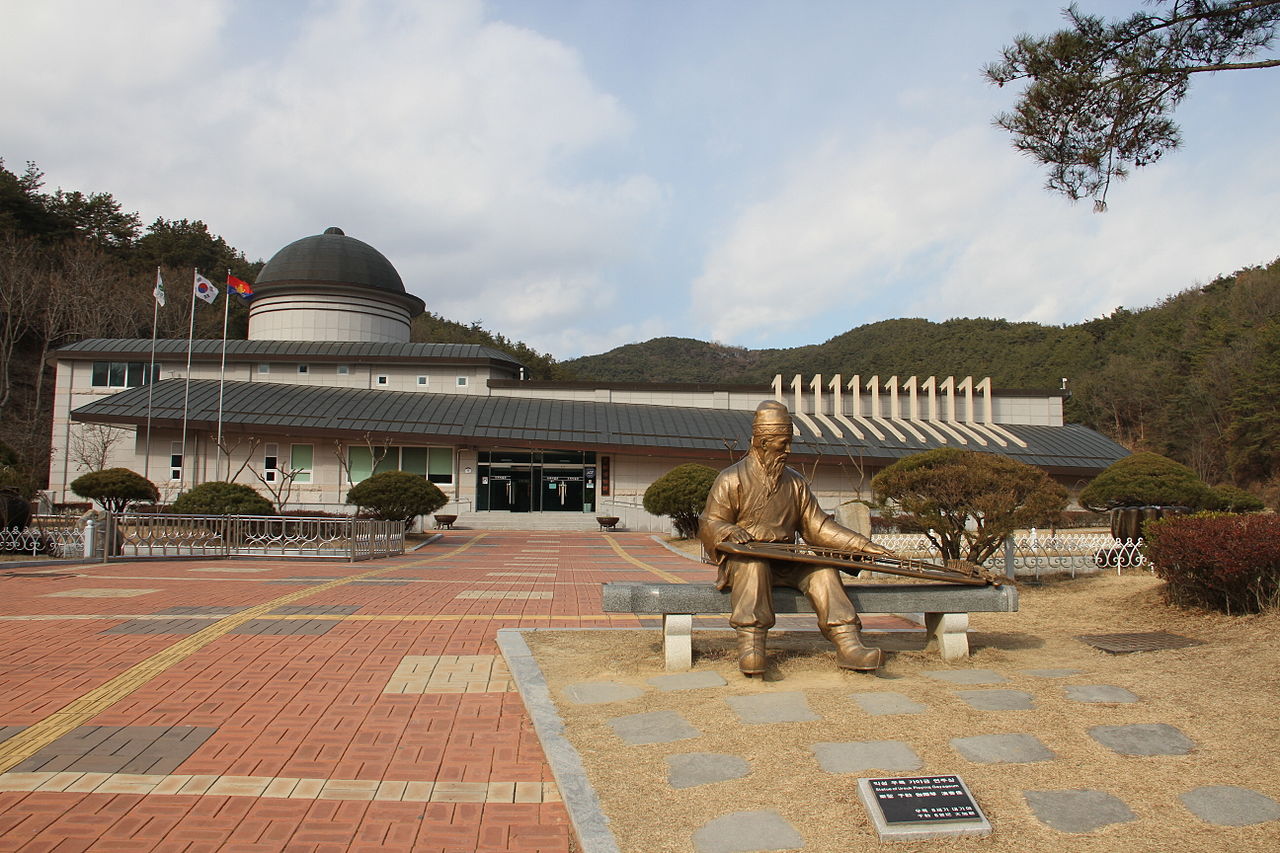
  2. Ureuk Museum, GoryeongUreuk Museum, Goryeong

    The Titles of the Twelve Pieces

    Ureuk’s twelve pieces are Hagarado, Sanggarado, Bogi, Dalgi, Samul, Mulhye, Hagimul, Sajagi, Geoyeol, Sapalhye, Isa and Sanggimul. Bogi and Sajagi are the names of entertainments (gieak), and the rest are thought to be the names of places in Gaya, such as Geoyeol (Geochang), Samul (Sacheon) and Sapalhye (Chogye), though for many of them the location is disputed; Hagarado, for example, is placed by some at Gimhae and by others at Haman. Some scholars therefore see them as pieces composed to bind the Gaya states together at a time when Daegaya led them. The Samguk Sagi also records the titles of three pieces by Nimun: “Crow,” “Rat” and “Quail.”

    Samguk Sagi, Treatises, Music · Encyclopedia of Korean Culture, “Ureuk’s Twelve Pieces”
  3. Tangeumdae, ChungjuTangeumdae, Chungju · Where Ureuk is said to have played the gayageum

    Ureuk Goes to Silla

    All that is recorded of Ureuk’s origins is that he was a man of Seongyeol-hyeon, and there are several theories about where Seongyeol-hyeon was, including Uiryeong and Jecheon. The Samguk Sagi records that when his country was about to fall into chaos, he took his instrument and went to King Jinheung of Silla; that in 551 he played before King Jinheung at Harim Palace in Nangseong; and that the king had him settle at Gugwon (today’s Chungju). In 552, Ureuk taught the zither, song and dance respectively to Gyego, Beopji and Mandeok, whom the king had sent (Beopji’s name is also written “Juji”). Tangeumdae, on the banks of the Namhan River in Chungju, is said to take its name from Ureuk playing the gayageum there.

    Samguk Sagi, Treatises, Music · Samguk Sagi, Silla Annals, 12th and 13th years of King Jinheung
  4. Five Pieces and “Proper Music”

    According to the music treatise, the three men who had learned eleven pieces cut them down to five, saying they were “overwrought and excessive, and not proper”; Ureuk, angry at first, wept when he heard the five and said they “may be called proper.” This resembles what Confucius said of “Guanju” in the Book of Songs: “joyful but not excessive, sorrowful but not hurtful.” When a remonstrating minister objected that it was “the music of Gaya, a fallen kingdom (亡國之音),” King Jinheung said, “The king of Gaya brought ruin on himself; what fault is there in the music?” and made it the daeak, the kingdom’s great music. The records do not say when this happened, so this episode, following the king’s words, places it after the fall of Daegaya.

    Samguk Sagi, Treatises, Music · Analects, “Bayi”
  5. Jisan-dong Tombs, GoryeongJisan-dong Tombs, Goryeong · The tombs of Daegaya

    Daegaya and the Jisan-dong Tombs

    The geography treatise of the Samguk Sagi records that Goryeong County was originally the kingdom of Daegaya, which lasted 16 reigns and 520 years, from its founder, King Ijinasi, to King Doseolji, before it was destroyed by King Jinheung. The great tombs of Daegaya’s ruling class line the southern ridge of Mount Jusan in Goryeong: these are the Jisan-dong Tombs. Tomb No. 44, excavated in 1977, is about 25–27 meters across; three large stone chambers in the center are surrounded by 32 small stone cists, so around 40 people are thought to have been buried together (sunjang, or retainer burial). As we saw in Episode 28, Silla banned sunjang in 502.

    Samguk Sagi, Treatise on Geography · Encyclopedia of Korean Culture
  6. Pottery horn cup in the shape of a mounted warriorPottery horn cup in the shape of a mounted warrior (National Treasure) · A Gaya horseman in iron armor

    Iron Ingots and the Iron of Daegaya

    Iron ingots, found in large numbers in Gaya tombs, are flat slabs of iron, narrow in the middle and broad at both ends. Some scholars think they were raw material for making iron goods, others that they were used like money, and the iron ingots found in Japan are thought to have come from Gaya and nearby regions. Large quantities of iron armor and helmets, long swords and horse gear have been found in Daegaya tombs, and Goryeong-style pottery spread as far as Jinju, Goseong and Haman in the first half of the 6th century. The blacksmith, his daughter Garam and her grandson in this episode appear in no record; they are imagined.

    Encyclopedia of Korean Culture, “Iron Ingots,” “Daegaya”
  7. Gilt-bronze crown of GayaGilt-bronze crown of Gaya · National Museum of Korea

    562, and Gaya’s Many Names

    The Silla Annals record that in the ninth month of 562, “when Gaya rebelled,” Isabu and Sadaham attacked it and received its surrender, while the biography of Sadaham says he attacked “Gara.” The records show many names like these: Gaya, Gara, Garyang and Imna Gara (on the Gwanggaeto Stele). The 8th-century Japanese Nihon Shoki calls the land of Gaya “Imna” (Mimana) and writes as if Wa ruled it, but scholars do not accept this as fact. And the “Record of Garak” says that King Guhyeong, the last king of Geumgwan, surrendered in 562, which differs from the 532 of the Samguk Sagi, so Iryeon kept both accounts. Apart from the few words preserved in the records, the characters’ words are imagined, as are King Gasil’s feast (the lion mask dance came from the view that the title “Sajagi” refers to a lion dance), the quarrel among the Gaya nobles, Ureuk and Nimun’s conversation at night, and the scene of the news reaching Gugwon.

    Samguk Sagi, Silla Annals, 23rd year of King Jinheung · Biographies, Sadaham · Samguk Yusa, “Record of Garak”

Key Words of This Episode

Next episode

Episode 33 · The First Queen

Deokman, the eldest daughter of King Jinpyeong, who had no sons, looked at a painting of peonies without butterflies and realized that the flowers had no scent. In 632, Deokman becomes the first queen of this land.

Photo credits

All illustrations in this webtoon are original. Character names and dialogue are imaginative reconstructions based on historical facts and research. Dates and interpretations follow mainstream scholarship; where scholars disagree, the History Notes say so.