‹ Episodes
Ep. 30The King Who Took the Han River
EN
Episode 30

The King Who Took the Han River

King Jinheung of Silla · 540–576
Scroll down ↓
🎧 It’s more vivid with sound.
Wind, campfire and river sounds change with every scene, and the music follows the story.
Previously

In the last episode, we met King Beopheung of Silla. When the king, who had promulgated a law code, tried to build a temple, the nobles opposed him, and the young official Ichadon, it is said, gave his life to open the way for Buddhism. In 532, Kim Gu-hae, king of Geumgwan, came to surrender. When King Beopheung died in 540, the throne passed to Sammaekjong, his nephew and also his grandson through his daughter.

Characters

King JinheungKing of Silla · named Sammaekjong
Became king at seven
IsabuSilla general
Made Usan surrender
GeochilbuSilla noble
A monk in his youth
HyeryangRenowned Goguryeo Dharma master
UreukMusician from Gaya
Twelve-string gayageum
Kim Mu-ryeokMilitary governor of Sinju
Kim Yu-sin’s grandfather

The seventh month of 1816. Bibong, a peak of Bukhansan, north of Hanyang, the Joseon capital.

Kim Gyeong-yeonSome call it Master Muhak’s stele,
and some say it has no writing at all.
Kim Jeong-huiYoung Joseon scholar
Kim Jeong-hui…No. There’s writing
under the moss!
眞興太王
Kim Jeong-huiJin… heung… Great King…!

It was a stele raised on this mountaintop by a king of Silla more than 1,200 years before.

Silla was a kingdom whose capital, Seorabeol, lay at the far southeastern corner of the Korean Peninsula.

How did a king of that kingdom come to raise a stele on a mountaintop by the faraway Han River?

The story begins in Seorabeol, in 540.

In the autumn of 540, when King Beopheung died, his seven-year-old nephew and grandson through his daughter, Sammaekjong, took the throne.

King JinheungSeven-year-old king · Named SammaekjongQueen DowagerThe king’s mother · King Beopheung’s daughter

Because the king was still young, his mother, the Queen Dowager, ruled in his place.

The young kingMother… this crown
is too heavy.
Queen DowagerA king must bear
what is heavy.
The young kingI name Isabu Minister of War,
in command of all forces, within and without!
IsabuThe general who made Usan surrender
IsabuI will serve you
with my life.

In the third month of 541, in spring, a full foot of snow fell on Seorabeol.

In the seventh month of 545, the Ichan Isabu addressed the king.

IsabuA nation’s history records the good and ill of kings and subjects,
to show them to all the ages to come.
If it is not compiled now,
what will those who come after have to read?
KingWell said.
KingGeochilbu, gather the scholars
and compile the kingdom’s history.
GeochilbuDaeachan · Fifth-generation descendant of King Naemul
…You were
a monk?

In his youth, Geochilbu had shaved his head, become a monk, and wandered far and wide.

As a young man, Geochilbu slipped into Goguryeo dressed as a monk to spy on it. There, the renowned Dharma master Hyeryang happened to be expounding the sutras.

HyeryangRenowned Goguryeo Dharma master
HyeryangWhere have you come from?
Geochilbu…I am from Silla.
HyeryangI have seen many men in my time,
but you are no ordinary man.
GeochilbuI only came
to learn from you, Master.
This country, too, has men who can read a face.
Go home quickly, before you are caught.
HyeryangA swallow’s chin and a hawk’s eyes…
you will be a general one day.
When you come leading an army,
do me no harm.
GeochilbuIf it comes true, I will never betray you, Master.
I swear it by that bright sun!

Geochilbu went straight back to Silla and entered government service, and at the king’s command he compiled the Guksa.

In 548, when Goguryeo and the Ye attacked Baekje’s Doksan Fortress, the king gave General Ju Jin 3,000 crack troops and sent him to rescue Baekje.

Baekje and Silla had stood together against Goguryeo for more than a hundred years.

In 550, Baekje and Goguryeo each took a fortress from the other: Baekje took Dosal Fortress, and Goguryeo took Geumhyeon Fortress.

The seventeen-year-old kingBoth armies are worn out.
Take the two fortresses now!
IsabuI will carry out your command!

Isabu captured both fortresses, built up their walls, and left 1,000 armored soldiers to hold them.

Around that time, the Silla army crossed Jungnyeong Pass and took Jeokseong on the Namhan River (today’s Danyang, North Chungcheong Province).

IsabuYaicha of Jeokseong gave his whole heart.
For his service, he shall be rewarded!
Mu-ryeokA commander who fought alongside

The stone carved with this order also bore the names of commanders such as Isabu and Mu-ryeok.

King JinheungFrom this year, the years
shall be counted as “Gaeguk”!
It means opening the nation anew!

In the first month of 551, the king, now eighteen, changed the era name to “Gaeguk (開國).”

In the third month of 551, while staying at Nangseong on a royal tour, the king heard that Ureuk, a musician from Gaya, and his pupil Nimun knew music well, and he summoned them specially.

NimunUreuk’s pupil
King JinheungTwelve strings, I see.
UreukKing Gasil made this Gaya instrument,
modeled on the twelve months.

When Gaya fell into turmoil, Ureuk had come to Silla carrying his instrument. Each of the two composed new songs and played them before the king.

That year, the king ordered eight generals, including Geochilbu and Gujin, to attack Goguryeo together with Baekje.

GeochilbuTo the Han River!

When Baekje broke through on the lower Han River first, Geochilbu and the others rode the momentum and took the ten counties beyond Jungnyeong Pass and short of Gohyeon.

Just then, an old monk stood by the roadside with his disciples. It was Hyeryang.

GeochilbuThat day, Master, you saved my life.
How can I ever repay such kindness?
HyeryangMy country is in turmoil;
its fall is not far off.
Take me to your land, I pray you.
HyeryangWhen you come leading an army, do me no harm.

Geochilbu came home riding in the same cart as Hyeryang. The king made Hyeryang seungtong, the leader of the kingdom’s monks, and held the Hundred-Seat Assembly and the Palgwanhoe for the first time.

Seorabeol, 553. It was the second year since Baekje had taken the lower Han River and Silla the upper.

CourtierWould you break
our pact with Baekje?
King JinheungSet sail from the river mouth,
and you reach China across the sea.
…We must have the whole Han River.

In the seventh month of 553, Silla seized Baekje’s northeastern frontier, the land along the lower Han River, and set up “Sinju” there.

Kim Mu-ryeokMilitary governor of Sinju · Youngest son of the last king of Geumgwan
Kim Mu-ryeokRight to the river mouth,
it’s all Silla land!
GoguryeoBaekjeSillaYellow SeaEast SeaThe Han RiverJungnyeong PassSeorabeolSabi551 · Silla10 upper-Han counties beyond Jungnyeong551 · BaekjeThe lower Han, retaken553 · SinjuTaken by Silla from BaekjeSea route → ChinaBorders and locations are approximate;scholars disagree.

It was land taken from Baekje, the ally that had fought beside Silla two years before.

In the tenth month of 553, the king took the daughter of the Baekje king as a “lesser queen” (sobi).

Baekje princessKing Seong’s daughter · Name not recorded

This was the king who had seized Baekje’s Han River lands three months before. Why the marriage took place is recorded nowhere.

In the seventh month of 554, Myeongnong (King Seong) of Baekje attacked Silla’s Gwansan Fortress together with Gaya.

The Silla troops holding Gwansan Fortress were pushed back.

Hearing the news, Kim Mu-ryeok, military governor of Sinju, rushed to Gwansan Fortress with the Sinju troops.

DodoGogan of Samnyeonsan County · Kim Mu-ryeok’s aide
Kim Mu-ryeokHurry!

That night, the Baekje king reached Gucheon with only fifty foot soldiers and horsemen.

The Silla records stated that Dodo, Kim Mu-ryeok’s aide, struck swiftly and killed the Baekje king.

The Silla records stated that in this battle they cut down four Baekje Jwapyeong and 29,600 soldiers.

Not a single horse
made it home.

匹馬無反者 — Samguk Sagi, Silla Annals, 15th year of King Jinheung (554)

News of the victory reached Seorabeol. In the Seorabeol palace was the lesser queen who had come from Baekje as a bride nine months before.

Queen DowagerA king must bear
what is heavy.

What the two of them said to each other that day is recorded nowhere.

In the tenth month of 555, the king toured in person as far as Bukhansan and fixed the borders of the newly won land.

King JinheungTo where that river
meets the sea—
it is Silla’s land now.

Returning in the eleventh month, he waived a year’s taxes for the districts he had passed through and pardoned all prisoners except those guilty of two kinds of crimes.

Afterward, a stele recording the king’s tour of this land was raised on this peak.

At every edge of the land the king had won, a stele was raised.

GoguryeoBaekjeSillaYellow SeaEast SeaSeorabeolJeokseong SteleDanyang · c. 545–550Bukhansan SteleThe Han River · After 555Changnyeong SteleNear the Gaya lands · 561Hwangchoryeong SteleNortheastern pass · 568Maullyeong SteleNortheastern coast · 568Daegaya (562)Borders and locations are approximate;scholars disagree.

In 562, Isabu, together with Sadaham, a hwarang of fifteen or sixteen, brought down Daegaya.

In 568, the king raised steles far to the northeast as well, at Hwangchoryeong and Maullyeong.

On the steles, the king called himself by the royal “We” (jim) and wrote:

Extending our borders on every side, we won people and land far and wide;
neighboring kingdoms swore good faith, and envoys of peace came and went.

四方託境 廣獲民土 隣國誓信 和使交通 — Maullyeong and Hwangchoryeong Steles (568)

In the spring of 572, Crown Prince Dongnyun died before his father. In the tenth month of that year, the king held a Palgwanhoe for seven days at a temple outside the city for the soldiers who had died in battle.

ChildMom, will Dad
see those lights too?

In the spring of 576, the king chose outstanding young men, had them finely adorned, and had them honored under the name “hwarang.”

HwarangWherever there are mountains and rivers,
there we go!

The hwarang and their followers cultivated the Way together, delighted in song and music, and roamed famous mountains and rivers.

In his last years, the king shaved his head, put on a monk’s robe, and called himself “Beobun.”

The young kingMother… this crown is too heavy.

In the eighth month of 576, in autumn, King Jinheung died. It was the thirty-seventh year since he had taken the throne.

In the sixth month of 1817, Kim Jeong-hui climbed this peak again with Jo In-yeong, examined the 68 characters that remained, and deciphered them.

King JinheungTo where that river meets the sea—

And so the king’s name, forgotten beneath the moss, came back into the world.

With the Han River in its hands, Silla now sent envoy after envoy across the Yellow Sea to China.

The small kingdom at the southeastern tip of the Korean Peninsula
now stood at the very center of the three kingdoms.
End of Episode 30

History Notes

The scenes in this story are based on these records and sites.

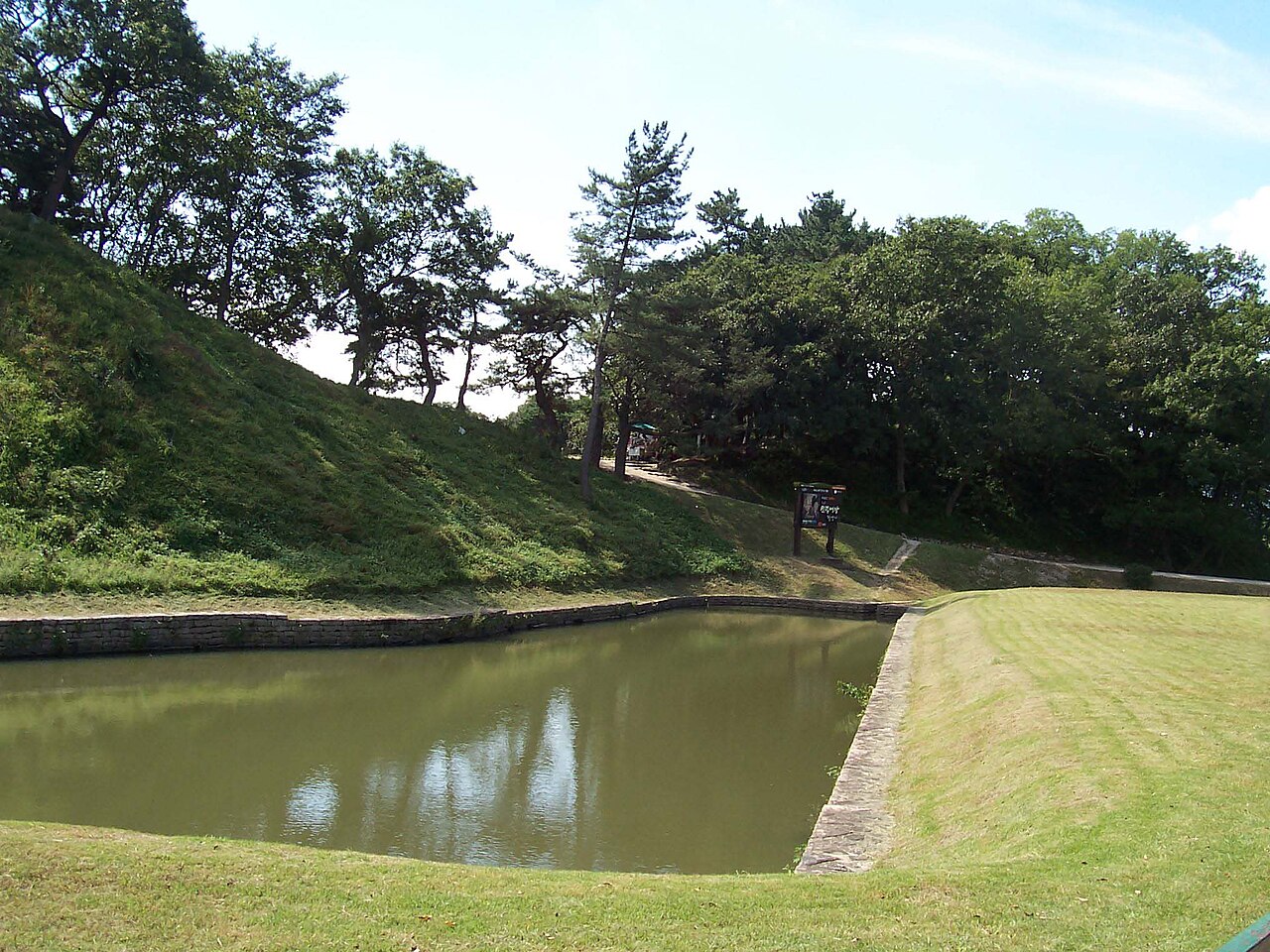
  1. Wolseong Fortress and its moat, GyeongjuWolseong Fortress, Gyeongju · Where the Silla palace stood

    Seven Years Old, or Fifteen?

    The Samguk Sagi says King Jinheung took the throne at seven and that the Queen Dowager ruled in his place, but the Samguk Yusa says he became king at fifteen. His father was Ipjong Galmunwang, King Beopheung’s younger brother, and his mother was King Beopheung’s daughter, so King Jinheung was both Beopheung’s nephew and his grandson through his daughter. Many take the change of the era name to “Gaeguk” in 551 as a sign that the king began ruling in person around this time.

    Samguk Sagi, Silla Annals, King Jinheung · Samguk Yusa, “Wonders,” King Jinheung
  2. An early edition of the Samguk SagiAn early edition of the Samguk Sagi

    Geochilbu, Hyeryang, and the Guksa

    In 545, when Isabu proposed compiling a history, saying that “a nation’s history records the good and ill deeds of kings and subjects to show them to all the ages to come,” the king had Geochilbu gather scholars and compile the Guksa. The book does not survive. The biography of Geochilbu in the Samguk Sagi tells how he became a monk in his youth and went to spy on Goguryeo, came home safely thanks to the Dharma master Hyeryang, and in 551 met Hyeryang again on Goguryeo soil and brought him back to Silla. The king made Hyeryang seungtong and held the Hundred-Seat Assembly and the Palgwanhoe for the first time. Geochilbu became Sangdaedeung in 576 under King Jinji and died at seventy-eight.

    Samguk Sagi, Biographies, Geochilbu · Samguk Sagi, Silla Annals, King Jinheung
  3. Silla Stele at Jeokseong, DanyangSilla Stele at Jeokseong, Danyang (National Treasure)

    Silla Stele at Jeokseong, Danyang

    A stele found in January 1978 by a Dankook University survey team inside the Jeokseong mountain fortress in Danyang, North Chungcheong Province (National Treasure). Its top has broken off, but some 280 characters remain legible. It records the king’s order to Isabu and other commanders to reward Yaicha, a local man who gave his all when Silla took Jeokseong, and to grant the same reward in future to anyone who does likewise. Comparing the ranks of the commanders carved on it, scholars date it to around 545–550, and it shows that Silla had already crossed Jungnyeong Pass and advanced to the upper reaches of the Namhan River. The stele also bears the name of Mu-ryeok, who later became military governor of Sinju.

    Silla Stele at Jeokseong, Danyang · Encyclopedia of Korean Culture
  4. Ten Counties in 551, Sinju in 553

    The biography of Geochilbu in the Samguk Sagi says that in 551, after Baekje first broke “Pyongyang,” Geochilbu and the eight generals took the ten counties outside Jungnyeong Pass and within Gohyeon. Many take this “Pyongyang” to mean not the Goguryeo capital but the Han River basin, and the Goguryeo Annals also record that in that year the Göktürks besieged Sinseong in Liaodong and that “Silla invaded and took ten counties.” In the seventh month of 553, Silla seized Baekje’s northeastern frontier and set up Sinju, and it sent envoys to Northern Qi in 564 and, from 566, again and again to Chen. The Samguk Yusa carries an entirely different story as well: that King Jinheung refused a proposal to join Baekje in attacking Goguryeo, and told Goguryeo about it.

    Samguk Sagi, Biographies, Geochilbu · Goguryeo Annals, King Yangwon · Samguk Sagi, Silla Annals, King Jinheung · Samguk Yusa, “Wonders,” King Jinheung
  5. Gwansan Fortress — The Silla Account

    The Silla Annals record that in the seventh month of 554, when Myeongnong, king of Baekje, attacked Gwansan Fortress with Garyang (Gaya), the military governor Gakgan Udeok, Ichan Tamji and others fought back but were pushed back; then Kim Mu-ryeok, military governor of Sinju, rushed to the scene, and his aide Dodo, Gogan of Samnyeonsan County, killed the Baekje king. They go on to say that four Jwapyeong and 29,600 soldiers were cut down and that “not a single horse made it home.” The Baekje Annals say only that the king reached Gucheon at night with fifty foot soldiers and horsemen, ran into an ambush and was killed. Gwansan Fortress is thought to be today’s Okcheon, and Dodo’s home, Samnyeonsan County, today’s Boeun, both in North Chungcheong Province.

    Samguk Sagi, Silla Annals, King Jinheung · Samguk Sagi, Baekje Annals, King Seong
  6. King Jinheung’s Royal Tour Monument, BukhansanKing Jinheung’s Royal Tour Monument, Bukhansan (National Treasure) · National Museum of Korea

    King Jinheung’s Royal Tour Monuments and Kim Jeong-hui

    The king toured the lands he had won in person (sunsu) and raised steles there. The Hwangchoryeong and Maullyeong steles of 568 and the Bukhansan Stele on Bibong Peak are the royal tour monuments, and together with the Changnyeong Border-Expansion Stele of 561 they are counted as “King Jinheung’s four steles.” For a long time the Bukhansan Stele was called “Master Muhak’s stele,” or, since it was covered in moss, “the stele with no writing.” In the seventh month of 1816, Kim Jeong-hui climbed up with Kim Gyeong-yeon and recognized it as King Jinheung’s stele, and in the sixth month of the following year he returned with Jo In-yeong and deciphered 68 characters. Some date its erection to the royal tour of 555, others to around 568 or later; today the latter view is more widely accepted. It was moved off the mountain in 1972 and is now in the National Museum of Korea (National Treasure).

    King Jinheung’s Royal Tour Monument, Bukhansan · Encyclopedia of Korean Culture · National Museum of Korea
  7. Samguk YusaSamguk Yusa

    The Birth of the Hwarang, and What This Episode Imagines

    The Samguk Sagi records that in the spring of 576 two women were first honored as “wonhwa,” but Nammo and Junjeong grew jealous of each other until one of them lost her life, and the band scattered; after that, young men were finely adorned and honored as “hwarang.” Yet there is also the story of Sadaham, who was already a hwarang when Silla attacked Daegaya in 562, so many believe the change from wonhwa to hwarang actually came before 562. The Samguk Yusa separately tells of Seorwollang being honored as the first gukseon. In this episode, the words exchanged by the two scholars in 1816, the words of the young king and his mother, the debate in the palace in 553, the king and the lesser queen on that night in 554, and the mother and child at the Palgwanhoe are imagined; the words of Geochilbu and Hyeryang paraphrase his biography.

    Samguk Sagi, Silla Annals, King Jinheung · Samguk Yusa, “Pagodas and Buddhist Images,” “Maitreya Seonhwa, Misirang and Master Jinja”

Key Words of This Episode

Next episode

Episode 31 · The Five Commandments

Sadaham, a hwarang of fifteen or sixteen, begs the king again and again to send him to the battlefield against Daegaya. Decades later, two young men kneel before the monk Wongwang and ask for teachings to keep all their lives.

Photo credits

All illustrations in this webtoon are original. Character names and dialogue are imaginative reconstructions based on historical facts and research. Dates and interpretations follow mainstream scholarship; where scholars disagree, the History Notes say so.