To Pyongyang
Wind, campfire and river sounds change with every scene, and the music follows the story.
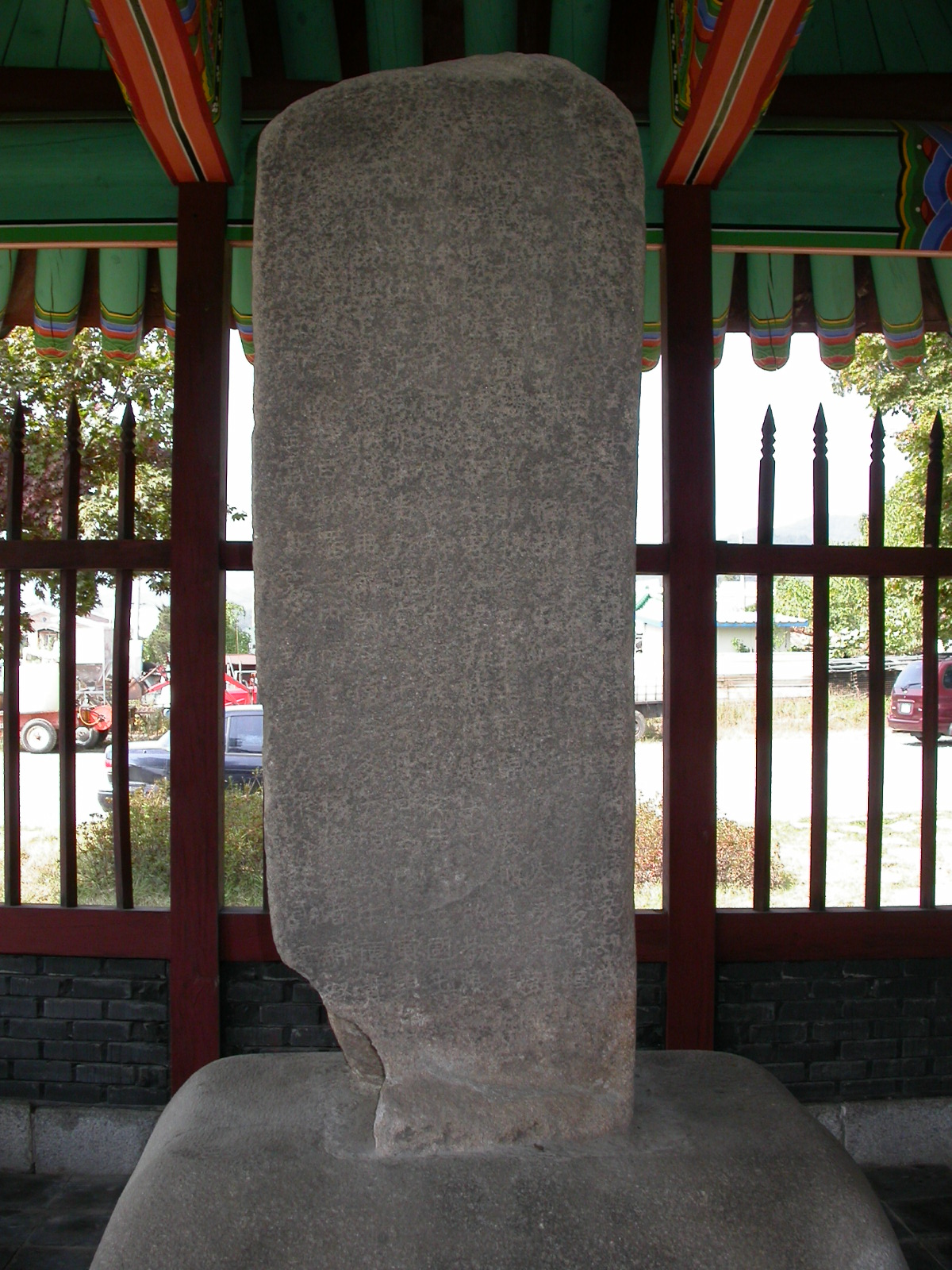
In 400, Later Yan to the west invaded and carried off more than 5,000 Goguryeo households, but King Gwanggaeto the Great held Liaodong Fortress and Mokjeo Fortress, and in 410 he brought even East Buyeo to its knees. Pointing to the Later Yan king, who had acted arrogantly before Liaodong Fortress and then retreated, the Great King told his young son Georyeon, “When a king grows proud, his soldiers pay the price” (an imagined scene in Episode 22). When the Great King died in 412 at thirty-nine, King Jangsu (Georyeon) took the throne, and in 414 he raised a giant stele beside his father’s tomb.
Characters
Rules the kingdom for 79 years
Driven out by Northern Wei, he comes to Goguryeo
Imagined character
“the Maegeum of the Eastern Barbarians”
Raised by his grandfather
Gungnae Fortress, the Goguryeo capital, in 427. In the fifteenth year of his reign, the thirty-four-year-old King Jangsu stood before his courtiers.
to Pyongyang.
a capital of 400 years?!
sits in a narrow valley.
and a river open to the sea.
there are too many deep-rooted clans.
The Samguk Sagi did not record why the capital was moved.
On the morning of departure, people carrying their loads passed even through the field where the Great King’s stele stood.
we’re leaving them behind?
but we take the hands that carve it.
In 427, Goguryeo left its old capital, Gungnae Fortress.
Following the king, countless people set out on the road south.
The Samguk Sagi recorded this in a single line: “moved the capital to Pyongyang (移都平壤).”
Pyongyang, on the Taedong River. The river ran on to the western sea, and wide plains stretched along its banks.
new capital!
as the sea!
Work began on building the new capital at Pyongyang.
A fortress on the plain in peacetime, a mountain fortress on the hill behind in times of war — this is how scholars picture Pyongyang in this period.
and the house lasts a hundred years.
chiseling too!
Around that time in northern China, Northern Wei, a state of the Xianbei people, was absorbing its neighbors one by one.
In 435, when King Jangsu sent envoys to Northern Wei, Northern Wei sent envoys in return and conferred official titles on him.
As Northern Wei attacked again and again,
Northern Yan, west of Goguryeo, grew more endangered by the day.
That year, an envoy sent by Feng Hong, king of Northern Yan, came secretly to Pyongyang.
of my king.
and he asks that you receive him.
we will border Northern Wei directly.
In the fourth month of 436, Northern Wei took Bailang Fortress from Northern Yan. King Jangsu gave his generals Gallo and Maeng Gwang tens of thousands of troops and sent them to Longcheng, the Northern Yan capital.
those rags!
The Goguryeo soldiers took up the fine weapons from the Northern Yan armory and plundered the city far and wide.
In the fifth month of 436, Feng Hong set fire to his palace as he left for Goguryeo in the east, leading the people of Longcheng.
nothing but ashes.
The fire did not die out for ten days.
The women were put in armor and placed in the middle; Yang Yi’s swift troops guarded the outside, and the cavalry of Gallo and Maeng Gwang the rear.
With its carts moving side by side, the procession stretched more than 80 li from front to back.
The Northern Wei emperor sent his envoy Feng Bo to Goguryeo to demand that it hand over the king of Northern Yan.
Send the King of Yan to Wei!
civilizing rule — together with Feng Hong.
It meant he would not hand Feng Hong over. The Northern Wei emperor, enraged, wanted to attack Goguryeo, but his ministers talked him out of it.
When Feng Hong reached Liaodong, in Goguryeo territory, King Jangsu sent an envoy to console him with these words.
your men and horses must be weary.
How dare you!
“King of Longcheng, Lord Feng” was a way of talking down to Feng Hong, who carried himself as the sovereign of a state, calling him something like “the king of the town of Longcheng, Sir Feng.”
Moved by way of Pingguo to Beifeng, Feng Hong always looked down on Goguryeo.
is law!
He handed out punishments and rewards as if he were still in his own kingdom.
King Jangsu took away Feng Hong’s attendants and carried off his crown prince, Wang Ren, as a hostage.
my crown prince?!
Feng Hong sent envoys across the sea to Song in the south, asking to be taken in.
Song sent envoys, Wang Baiju among them, to fetch Feng Hong, and asked Goguryeo, too, to send him.
King Jangsu did not want Feng Hong to go south.
his soldiers pay the price.
to Beifeng.
In the spring of 438, Son Su and Go Gu killed Feng Hong and more than ten of his descendants at Beifeng.
Wang Baiju of Song, who had come to fetch Feng Hong, fell upon Son Su and Go Gu with the 7,000 or so men under his command, killing Go Gu and capturing Son Su.
King Jangsu seized Wang Baiju and sent him to Song.
Not wishing to go against the will of a distant kingdom, the Song emperor threw Wang Baiju into prison, then released him not long after.
Autumn, in the seventh month of 450: the fields of Siljik (today’s Samcheok) on the East Sea coast. A Goguryeo frontier general was out hunting.
Get him!
Samjik, lord of Haseulla Fortress (today’s Gangneung) in Silla, had sent out troops, who fell upon him and killed him.
When King Jangsu heard the news, he was enraged and sent an envoy to the king of Silla to demand an answer.
I have been on the warmest of terms with you, Great King,
yet now you send troops to kill our frontier general.
What justice is there in this?
孤與大王 修好至歡也 今出兵殺我邊將 是何義耶 — Samguk Sagi, Silla Annals
is my fault.
When Goguryeo raised troops and attacked Silla’s western border, Nulji Maripgan apologized in humble words. The Goguryeo army went home.
Siljik is today’s Samcheok, and Haseulla is Gangneung. In Chungju, on the Namhan River, a Goguryeo stele still stands.
By the Namhan River, in today’s Chungju. Here Goguryeo erected a stone stele.
Scholars disagree on when it was erected.
…Now it’s my turn.
the Maegeum of the Eastern Barbarians.
The stele also called the king of Silla “Dongi Maegeum,” meaning “king of the Eastern Barbarians.”
According to the inscription, Goguryeo bestowed clothing on the Silla maegeum and his officials.
In 468, with 10,000 Malgal troops in the vanguard, Goguryeo took Silla’s Siljikju Fortress.
In the ninth month of 475, the eighty-two-year-old King Jangsu personally led 30,000 troops
and took Hanseong, the Baekje capital.
Pingcheng, the Northern Wei capital, in 484. Judging Goguryeo to be at the height of its power, the people of Northern Wei placed the Goguryeo envoy right after the Southern Qi envoy in the lodgings for envoys from many lands.
Second seat: the envoy of Goguryeo.
is mighty these days…
King Jangsu, who had outlived his son Joda, raised his grandson Naun in the palace and made him Crown Grandson.
once told me:
his soldiers pay the price.
Grandfather.
In winter, in the twelfth month of 491, King Jangsu died. He was ninety-eight years old.
He came to be known as King Jangsu, the “Long-Lived King.”
When Emperor Xiaowen of Northern Wei heard the news, he had a white cap and hemp clothes made, put them on, and went out to the eastern outskirts to mourn.
Northern Wei granted King Jangsu a higher title and gave him the posthumous name “Kang” (康).
The stonemason’s son, who had reached this riverbank at the age of ten, now had white hair too.
the river’s as wide as the sea!
As wide as the sea.
His grandson Naun took the throne. He is known as King Munjamyeong.
Pyongyang, the capital King Jangsu moved to,
remained Goguryeo’s capital for more than 240 years.